DASHER — Data-driven Structured Historic Energy Renovations
Integration and further development of existing tools to automate energy simulations at the district scale.
PROJECT INFORMATION
Time schedule
December 2025 – November 2028
Total cost of project
8 330 820 SEK
Swedish Energy Agency’s project number
P2025-01851
Coordinator
KTH Royal Institute of Technology
Project participants
KTH, Uppsala University, Aktea, ElectriCITY, City of Stockholm, AB Stadsholmen.
Project manager and contact
Hossein Shahrokni: hosseins@kth.se

How do we make Sweden’s most iconic buildings energy-efficient without destroying what makes them unique?
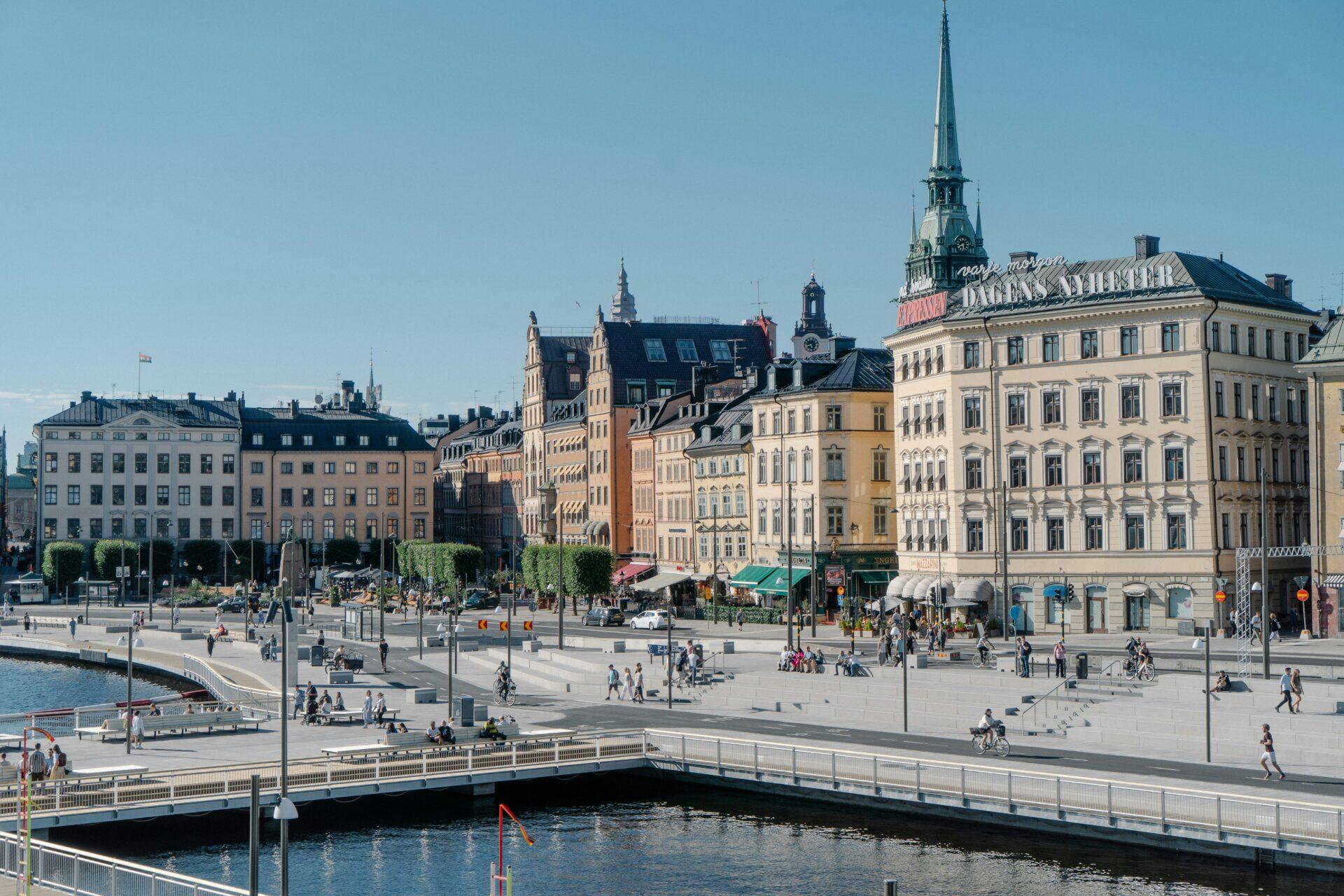
DASHER addresses this challenge by developing a data-driven methodology for energy retrofitting of culturally valuable buildings, using Stockholm’s Old Town (Gamla Stan) as a pilot area.
We work from “the Triangle” — a model that balances three often conflicting goals: energy efficiency, heritage preservation, and indoor comfort. Every proposed measure is evaluated against all three perspectives.
The project integrates and enhances KTH’s ODEN tool and Uppsala University’s HIBER Atlas to automate energy simulations at district level.
Stadsholmen AB and Gamla Stan’s housing associations provide the project with insights, data, and serve as its primary stakeholders. We map their buildings, identify representative archetypes, and analyze savings potential while respecting heritage requirements.
ElectriCITY engages housing cooperatives through their proven collaboration model, while Aktea conducts energy audits and cash flow analyses.
The City of Stockholm’s Environment Department connects the project results to its ongoing strategic energy and climate planning, and bridges the gap to municipal energy and climate advisory services.
The results will be a scalable method applicable to similar Swedish urban environments, a portfolio of tailored energy measures for Gamla Stan, and research-based guidance for the National Board of Housing (Boverket) on implementing the EU Energy Performance of Buildings Directive (EPBD 2024) in historic environments.
The consortium brings together academia (KTH, Uppsala University), industry (Aktea), civil society (ElectriCITY), municipality (City of Stockholm), and property owners (AB Stadsholmen). Together, we demonstrate that energy efficiency and heritage preservation are not adversaries — they are partners.

 LinkedIn